






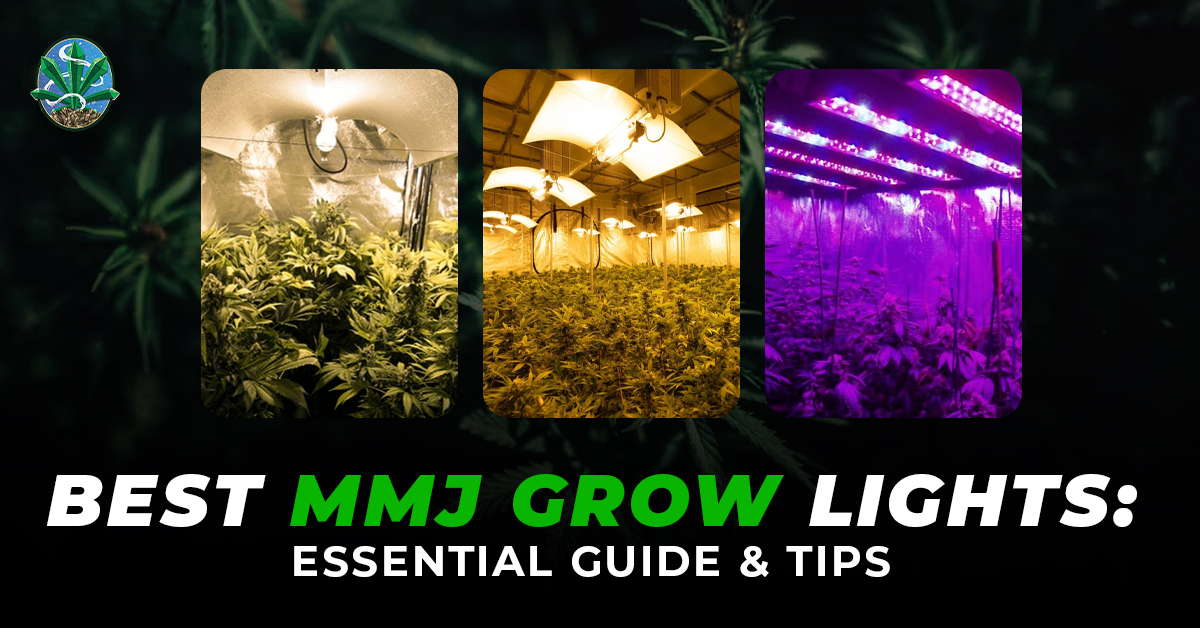
Indoor Grow Lights – MMJ grow lights, marijuana grow lights, grow lamps weed, and similar phrases are common labels in the indoor gardening market. In practice, they usually refer to high-output horticulture fixtures designed for light-hungry, flowering plants—most often modern LED grow lights built to deliver strong intensity, balanced spectrum, and even coverage.
This article is educational and focuses on general indoor horticulture lighting: how to evaluate grow lamps, understand core specs, compare fixture types, estimate electricity cost in the United States, and choose a safe, reliable setup. (Always follow local laws and building/electrical codes.) (Indoor Grow Lights)
Leans for grow lights (and what it doesn’t)
The best grow light isn’t automatically the one with the highest wattage or the loudest marketing. “Best” depends on your footprint (the canopy area you need to cover), your environment (heat management and ventilation), your plants (low-light foliage vs. high-light fruiting), and your budget (up-front cost versus long-term operating cost).
- Best for efficiency: high output per watt, less waste heat, and predictable monthly electricity use.
- Best for uniform coverage: strong corners and edges, not just a bright center hotspot.
- Best for flexibility: dimming, simple mounting, and a spectrum that works for many plant types.
- Best for reliability: quality drivers, good thermal design, and a meaningful warranty.
Roundups like “best LED grow lights,” “best rated LED grow lights,” and “top rated LED grow lights” can be helpful, but you’ll get the best outcome when you match real performance data to your space.
LED vs. HPS: why modern horticulture shifted (Indoor Grow Lights)
For years, indoor growers relied on HID lighting—especially HPS (High-Pressure Sodium). HPS can produce strong plant growth, but it usually comes with higher heat output and lower electrical efficiency than today’s better LED fixtures. That extra heat can be helpful in cold rooms, but in many homes it increases the need for ventilation and cooling.
Modern full spectrum LED lights usually win on everyday usability:
- Higher efficiency: more plant-usable light per watt (higher efficacy).
- Less radiant heat at the canopy: often easier temperature management.
- Long service life: no annual bulb swaps and slower output degradation when well built.
- More uniform options: especially bar-style fixtures that spread output across the footprint.
This is why searches like “most efficient LED grow lights” are usually about two goals at once: strong results and a manageable environment. (Indoor Grow Lights)
PAR, PPFD, and why your eyes can’t judge grow lamps
Human brightness perception doesn’t line up with what plants use. Plants respond primarily to PAR (photosynthetically active radiation), roughly 400–700 nm. A light that looks blinding in a room can still be mediocre for plants if its output and distribution don’t match horticulture needs.
The most common “how much light is landing on the plants?” measurement is PPFD (Photosynthetic Photon Flux Density), usually shown as a grid called a PAR map. (Indoor Grow Lights)
A simple analogy: your fixture is a rain cloud. PPFD tells you how heavy the “rain” is at each spot on the canopy. Great fixtures don’t only dump a downpour in the center—they keep the whole area consistently wet, including corners.
PPF and efficacy (µmol/J): the two specs that beat “watts” (Indoor Grow Lights)
Watts tell you how much electricity a fixture consumes, not how much usable plant light it produces. Two fixtures can both draw 400W and perform very differently. Instead, focus on:
- PPF (Photosynthetic Photon Flux): total PAR output from the fixture (µmol/s).
- Efficacy (µmol/J): how efficiently it converts electricity into PAR.
If you’re comparing good LED grow lights versus bargain fixtures, efficacy plus a credible PAR map is usually the fastest way to separate real performance from marketing.
How to read a PAR map (and spot misleading ones)
A PAR map is only meaningful if you know the test setup. Before trusting a grid of PPFD numbers, confirm:
- Footprint size: 2×2, 3×3, 4×4, etc.
- Hanging height: a map at 6 inches can look great but be unusable in real spaces.
- Power setting: full power or dimmed?
- Average vs. max: one huge max value can hide weak edges.
Uniformity matters. If the center is extremely high but corners are dramatically lower, you’ll get uneven results and a “best in the middle, weak on the sides” canopy. (Indoor Grow Lights)
Understanding spectrum: what “full spectrum” usually means
When you see full spectrum LED lights (or full spectrum LED lights described as a “sunlike” output), it typically means a white-light base (similar to daylight) plus additional red output. This is popular because it’s versatile, comfortable to work under, and tends to perform well across many plant types.
In broad strokes:
- Blue-leaning light often supports compact structure and sturdy vegetative growth in many species.
- Red-leaning light often supports flowering and fruiting behavior in many species.
Some fixtures add UV or far-red. Those can be useful tools in specific horticulture contexts, but for most buyers the biggest wins come from output, uniformity, dimming, and stable build quality—especially if you’re looking for the best full spectrum LED grow lights that are easy to live with day after day. (Indoor Grow Lights)
Fixture types: boards, bars, COBs, and “bulb” setups
Form factor affects coverage, thermal behavior, and how forgiving the light is to use.
- Board/panel LEDs: compact and common; often a strong best LED grow lamp choice for small footprints when the PAR map matches the area.
- Bar lights: multiple bars spread diodes across the canopy; frequently used in top rated LED grow lights for better edge-to-edge uniformity.
- COB (chip-on-board) fixtures: intense point sources; can work well but can create hotspots if not distributed.
- Bulb-style grow lamps: when people search full spectrum grow bulb or “best grow bulb,” they often mean screw-in bulbs. These can work for small shelves and houseplants, but usually can’t evenly light a large canopy at high intensity.
In many stores, “pot growing lamps” or “grow lamps for cannabis” are simply shorthand categories for high-output fixtures; the evaluation method is the same for any indoor crop: match coverage, check PAR maps, and confirm build quality. (Indoor Grow Lights)
Sizing your light: footprint first, then output
Most disappointing purchases happen because the fixture doesn’t match the area. A light that performs well in a 2×2 area won’t automatically scale to a 4×4 area, even if a listing says “equivalent to 1000W.” Start with the canopy size you truly plan to light.
A common planning shortcut for modern LEDs is that many high-intensity indoor gardens land around 30–40 watts per square foot, depending on fixture quality and plant goals. Treat that as a rough estimate—not a promise. Higher-efficacy fixtures can do more with less wattage; lower-quality fixtures can draw power without delivering uniform PPFD. (Indoor Grow Lights)
A practical intensity guide (general indoor horticulture)
Different plants have different light appetites. As a broad, general guide:
- Low-light foliage/shade-tolerant ornamentals: ~100–200 PPFD
- Leafy greens, herbs, many common houseplants: ~200–400 PPFD
- High-light flowering/fruiting plants: ~400–700+ PPFD (varies widely)
Rather than trying to “max out” intensity, aim for a controllable, consistent range that your environment can support. Dimming and mounting flexibility are what make high-output fixtures practical for more than one plant type.(Indoor Grow Lights)
Dimming and hanging height: the two controls that prevent light stress
Modern LEDs often include a dimmer, and it’s one of the best features you can buy. Hanging height is the other major lever. Distance changes intensity and spread: closer increases PPFD but can reduce uniformity; higher improves spread but lowers intensity. (Indoor Grow Lights)
- Start conservative: higher and/or dimmer when plants are small.
- Increase gradually: ramp output over days as plants fill the footprint.
- Keep the canopy level: uneven height creates hotspots and underlit pockets.
If you see bleaching at the very top, persistent upward curling, or unusually fast drying near the canopy, reduce intensity and confirm temperature, airflow, and humidity. (Indoor Grow Lights)
Optics and distribution: lenses, reflectors, and why uniformity wins
Two fixtures with similar PPF can perform differently because optics control where photons go. Some fixtures rely on wide diode spread for even coverage; others use lenses to focus output. Either can work—but it should match your space.
- Wide distribution: often ideal for tents, shelves, and short ceilings where evenness matters.
- Narrow/focused optics: can help in tall spaces, but may create hotspots if coverage isn’t managed. (Indoor Grow Lights)
Reflectivity and layout: getting more from the same light
Light doesn’t just go from the fixture to the leaves once. Walls, tent material, and even the geometry of your space influence how many photons get absorbed by plants versus wasted as heat on dark surfaces.
- Reflective walls: brighter interiors generally improve edge performance.
- Centered placement: placing fixtures symmetrically reduces corner drop-off.
- Canopy management: a level canopy improves uniformity more than many people expect.
Duration and DLI: time is part of the light “dose”
Plants respond to the total amount of light they receive per day, often described as DLI (Daily Light Integral). Two setups can have the same PPFD, but the one that runs longer delivers a larger daily dose.
This matters for planning and cost: intensity and duration work together. A quality timer (or controller) is one of the most underrated tools in indoor gardening because consistency is a major driver of reliable results. (Indoor Grow Lights)
Measuring light at home: PAR meters, sensors, and phone apps (Indoor Grow Lights)
A true quantum PAR meter is the most direct way to measure PPFD, but it can be expensive. Phone apps usually measure brightness to humans (lux), which can be helpful for relative comparisons but is not a direct PAR measurement and can vary by phone model. (Indoor Grow Lights)
If you measure light at home:
- Measure consistently: same hanging height, same grid points, same dimmer level.
- Track uniformity: compare corners vs. center, not just a single point.
- Use manufacturer maps as a baseline: then adjust for your environment and reflectivity.
Heat, ventilation, and why LEDs still need airflow
LEDs generally run cooler at the canopy than HID lights, but they still produce heat that must leave the space. Drivers and diodes warm the air, and in tents/closets that heat can accumulate quickly. Strong light can also increase plant water use; low humidity and poor airflow can make stress more likely.
- Ventilate: move warm air out and bring fresh air in.
- Circulate: gentle airflow across leaves reduces hotspots and microclimates.
- Plan for seasons: a setup that’s perfect in winter may run hot in summer.
United States electricity costs: estimating monthly spend
Electricity rates vary widely by state and utility, but the calculation is straightforward:
- Convert watts to kW: 500W = 0.5 kW
- Multiply by hours/day: 0.5 kW × 12 hours = 6 kWh/day
- Multiply by your rate and days: 6 × $/kWh × 30
At $0.18/kWh, that example costs about $32/month for the light. Higher efficacy can lower this cost while often reducing heat for the same canopy performance—one reason the most efficient LED grow lights can pay off over time. (Indoor Grow Lights)
Driver quality, dimming design, and why it affects real performance
The driver is the power supply that feeds the LEDs. Two fixtures can use similar diodes but feel very different because drivers affect stability, heat, and dimming behavior. A better driver often provides smoother dimming, stable output over long runs, and less wasted energy as heat.
- Remote vs. on-board drivers: remote mounting can reduce heat inside small enclosures.
- Dimming range: a wider usable range increases flexibility for different plants and setups.
- Consistency: stable output supports predictable results and reduces troubleshooting.
Build quality checklist: what separates top performers from cheap lookalikes (Indoor Grow Lights)
If you’re trying to identify a truly recommended LED grow light (Indoor Grow Lights) (rather than a short-lived bargain), look for:
- Driver quality: stable output, smooth dimming, sensible heat handling.
- Thermal design: adequate heat sinks and airflow paths; cooler diodes stay more efficient.
- Credible specs: realistic PPF/efficacy plus a detailed PAR map.
- Warranty and support: clear terms, responsive support, reasonable coverage length.
- Safety certifications (when available): especially important for higher-wattage fixtures.
Maintenance and longevity: keeping output consistent
Even the best LED grow lights can underperform if they’re coated in dust or trapped in hot, stagnant air. Simple maintenance helps preserve output and extends service life:
- Clean surfaces periodically: dust reduces light output and traps heat.
- Inspect connections: keep timers, plugs, and cords secure and dry.
- Listen for changes: buzzing, flicker, or unusual heat can signal a driver or connection issue.
Safety basics for indoor grow lamps
Grow lights run for long hours, so safety is part of choosing the best system:
- Don’t overload circuits: account for lights, fans, pumps, and heaters on the same breaker.
- Use quality surge protection: especially in areas with power fluctuations.
- Mount securely: use hangers rated for the fixture’s weight.
- Keep connections dry: indoor gardens can be humid; route cables thoughtfully.
FAQ: quick answers for buyers (Indoor Grow Lights)
Do I need full spectrum LED lights?
For general indoor horticulture, full-spectrum white + red fixtures are a strong default. Output and coverage matter more than the label. (Indoor Grow Lights)
What does “1000W” mean in many LED listings?
Often marketing shorthand. Compare PPF, efficacy, and PAR maps instead of relying on “equivalent” labels.(Indoor Grow Lights)
Are bar lights always better than boards?
Not always. Bars often win on uniformity in larger footprints, while boards can be excellent in small spaces if the PAR map is strong. (Indoor Grow Lights)
How do I avoid buying the wrong size?
Start with your footprint and choose a fixture with a PAR map tested over that exact area at a realistic hanging height. (Indoor Grow Lights)
A simple 3-step plan to pick the right light
- Step 1: Define your footprint. Measure the canopy area you’ll actually light.
- Step 2: Compare real performance. Check PPF, efficacy, and a credible PAR map for uniformity.
- Step 3: Plan the full system. Ventilation, circulation, timers, and safe electrical setup are part of the lighting decision.
When you use this approach, “best” becomes a practical match to your space and budget—not a guessing game based on hype. That’s the real key to choosing grow lamps that deliver consistent, repeatable indoor horticulture results.(Indoor Grow Lights)


